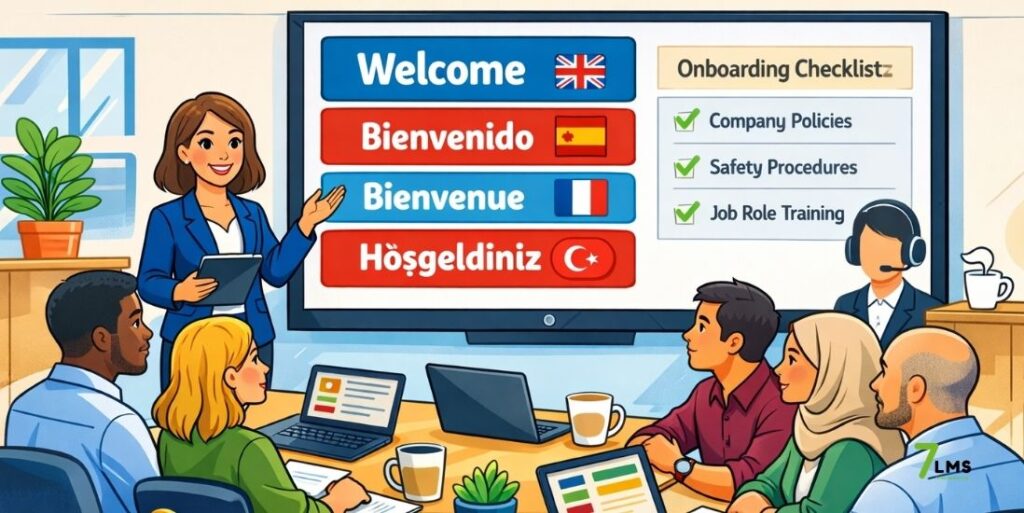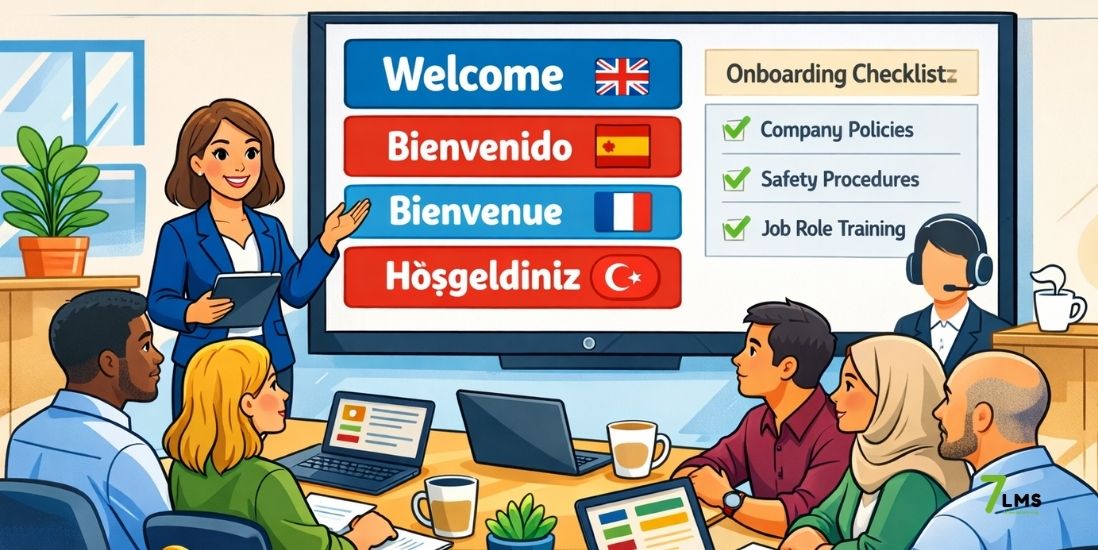
Why is it no longer a luxury for global and migrant workforces?
Multilingual onboarding is no longer a desirable extra. It is now a business need. Today, teams work across countries, cultures, and languages. Therefore, companies must help every new hire understand the job from day one. Clear training builds trust, reduces stress, and improves results.
Many companies still use one language for onboarding. However, that choice creates real problems. New workers may miss key details. They may feel lost, and they may make mistakes. In addition, managers may spend more time fixing small issues. Therefore, a better system helps everyone.
A strong onboarding process should be clear, fast, and human. It should also support safety, culture, and daily work. Because of this, smart companies now invest in multilingual onboarding. They want better communication, stronger retention, and faster adaptation.
What multilingual onboarding means
Multilingual onboarding gives new employees training in their own language. It helps them learn job tasks, company rules, and workplace culture. Moreover, it helps them feel welcome from the start.
This process includes more than translation. It also includes simple language, clear visuals, and useful learning paths. For example, a company may offer videos, guides, quizzes, and policy lessons in several languages. So, each worker can learn in a way that feels natural.
This approach works well for global teams. It also works well for migrant workers. Since these groups often face language barriers, they need extra support. Good onboarding removes that barrier early. Therefore, employees can focus on work, not confusion.
A strong multilingual training platform makes this process easier. It helps teams manage content, update lessons, and track progress. In addition, it gives leaders better control over learning quality.
Why companies need it now
Workplaces have changed fast. Many companies now hire across borders. Others hire local people from many language groups. Therefore, one-language onboarding no longer fits real workforce needs.
New employees need immediate clarity. They must understand safety rules, job steps, and team expectations. However, people cannot learn well when they struggle with language. They may nod and smile, yet still miss key points. Therefore, companies should not assume understanding.
This issue matters even more in healthcare, logistics, manufacturing, retail, and care services. In these sectors, small mistakes can create big problems. Because of this, employee onboarding training must be clear and direct. Language support protects both workers and companies.
In addition, workers now expect respect and inclusion. They want fair access to information. They also want equal chances to succeed. Therefore, multilingual onboarding supports both performance and dignity. That makes it a smart business move.

The risks of one-language onboarding
One-language onboarding creates gaps from the first day. New workers may not understand rules, systems, or workflows. As a result, they may feel anxious and slow.
Safety is one major risk. Workers need clear instructions about tools, machines, health steps, and emergency actions. If they miss those lessons, they may act the wrong way. Therefore, workplace safety training should never depend on guesswork.
Another risk is low confidence. New hires want to do well. However, unclear onboarding makes them feel weak, even when they are skilled. Therefore, they may ask fewer questions. They may also avoid tasks they could do well.
Retention also suffers. People leave when they feel ignored or unsupported. In addition, managers lose time when they must repeat basic information. Because of this, weak onboarding costs money.
A company may think translation takes effort. That is true. Yet poor onboarding costs more. Therefore, leaders should address the root problem early.
How multilingual onboarding improves business results
Good onboarding improves speed, quality, and trust. Multilingual onboarding helps new hires learn faster because they understand the content better. Therefore, they start contributing sooner.
It also improves engagement. People feel respected when a company speaks their language. In addition, they feel more confident when they understand each step. Consequently, they join the team with more energy.
This process also supports compliance. Companies often need workers to understand policies, codes, and procedures. However, rules only work when people truly understand them. Therefore, language access strengthens compliance in a practical way.
Better onboarding also reduces repeat questions. Managers spend less time explaining the same topics. As a result, teams save time and work more smoothly.
Moreover, the global workforce onboarding needs consistency. A company should deliver the same quality message in every location. A structured, multilingual system helps leaders do that. So, every new worker gets a fair start, no matter where they live.
Why migrant workers need special attention
Migrant worker onboarding needs care, clarity, and structure. Many migrant workers face two challenges at once. They learn a new job and a new environment. Therefore, they need more than standard orientation.
They may not know local work culture. They may also lack knowledge of local systems, rules, or social norms. Because of this, companies should include cultural adaptation training in onboarding. This training helps workers understand communication styles, schedules, and workplace behavior.
Simple examples help a lot. For instance, show how to report a problem. Show how to ask for help. Show how to follow a shift plan. In addition, explain rights, responsibilities, and support channels.
This support creates trust. Workers feel safer when they know what to expect. Moreover, they perform better when they understand both the job and the culture. Therefore, migrant worker onboarding improves both inclusion and business outcomes.
A company that supports migrant workers shows real leadership. It proves care through action, not words.
What strong multilingual onboarding includes
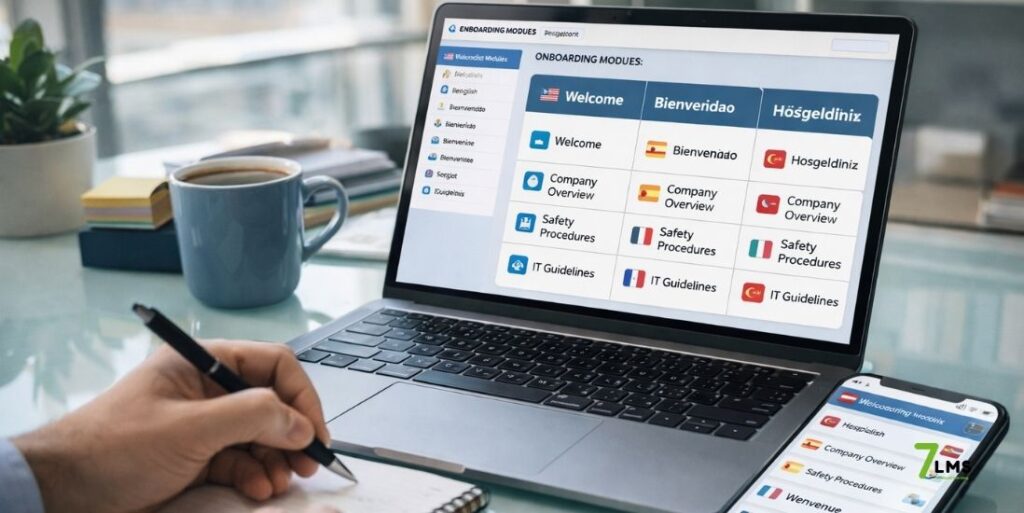
Strong multilingual onboarding uses a clear structure. First, it gives essential job information. Second, it explains safety and compliance. Third, it supports culture and communication. Therefore, the process feels complete.
Each lesson should use simple language. Keep sentences short. Use visuals, icons, and examples. In addition, break content into small steps. Therefore, learners can focus without stress.
A strong program should include:
- welcome content
- job role training
- workplace safety training
- company values
- communication rules
- HR policies
- support contacts
However, content alone is not enough. Companies should also check understanding. Short quizzes help. Managers can also use simple follow-up questions. Because of this, leaders see what workers know and where they need support.
A good multilingual training platform makes updates easy. It helps companies add languages, assign lessons, and track completion. Moreover, it supports growth across teams and locations.
Common mistakes companies should avoid
Many companies make the same onboarding mistakes. First, they translate word for word. However, direct translation often sounds unnatural. Workers still feel confused.
Second, they use difficult language. Long sentences and technical words create barriers. Therefore, companies should use simple and direct English. They should also adapt the text for each audience.
Third, they ignore culture. Language matters, but culture matters too. Because of this, cultural adaptation training should sit inside the onboarding process. Workers need context, not only words.
Fourth, they overload the first week. New hires cannot remember everything at once. Companies should spread learning over time. Small steps lead to stronger results.
Finally, some companies never measure success. They deliver lessons, yet they do not check outcomes. In addition, they miss feedback from learners. Therefore, they cannot improve the system.
Strong onboarding needs review, updates, and care. That is how companies stay effective.
How 7LMS supports better onboarding
A flexible learning system helps companies move faster. 7LMS supports organizations that need clear, practical, and inclusive learning. Therefore, it fits modern onboarding needs well.
It supports multilingual content, quick customization, and mobile access. So, companies can train workers in different roles and locations. In addition, teams can create learning paths for real workforce needs.
This matters for onboarding. New workers need access at the right time. They also need content they can understand. Because of this, a simple and adaptable platform creates better learning results.
7LMS also supports use cases beyond onboarding. For example, it can support safety, health education, digital skills, and reskilling. Therefore, organizations can use one system for many goals.
A good platform does not just store content. It helps people learn with confidence. That is why multilingual onboarding works best when the technology stays simple and the learning stays human.
Conclusion
Multilingual onboarding gives companies a clear advantage. It improves understanding, safety, trust, and retention. Moreover, it helps global teams and migrant workers start strong. That creates better work from the first day.
Today, companies cannot rely on one-language training. Workforces are diverse, and learning must match that reality. Therefore, leaders should build onboarding that is simple, inclusive, and practical. When companies invest in multilingual onboarding, they show respect, reduce risk, and create stronger teams.
Want to understand how educators see the future of AI in learning?
Explore our recent article, Projecting the Future: Teacher Views on AI in Education, to discover key insights, real concerns, and emerging opportunities. Learn what teachers expect from AI tools and how these views may shape the future of education. Read the full article now and stay ahead of the change.
Disclaimer:
This blog is for informational and awareness purposes only. The content can be verified from other sources. The author accepts no legal responsibility for any decisions made based on this information.